Siding Rot Repair, Sheathing Replacement & House Wrap Installation in Wilmington, NC
Wilmington Window & Siding Installation helps Wilmington, North Carolina homeowners evaluate and repair concealed rot, deteriorated sheathing and damaged weather-resistive barriers discovered behind siding. When siding is removed, deterioration may sometimes be found in the materials behind it — exterior sheathing, house wrap or weather barrier, flashing and, in more serious cases, framing.
Visible siding damage does not automatically mean hidden sheathing is rotten. Warning signs can include soft siding or trim areas, recurring water stains, swelling, rot near windows, deteriorated lower wall areas, repeated siding repairs, moisture entry and storm damage. We evaluate what lies behind the cladding before recommending a repair scope.
Siding, Sheathing & House Wrap Explained
Understanding the layers behind your siding helps explain why visible damage and concealed damage are not always the same problem. These components work together as a water-managed exterior wall assembly.
Siding
The exterior cladding layer that provides the visible finish of the wall and helps shed weather. Vinyl, fiber cement, engineered wood and cedar are common siding materials. Siding is the outermost layer, not the only water-management layer.
Sheathing
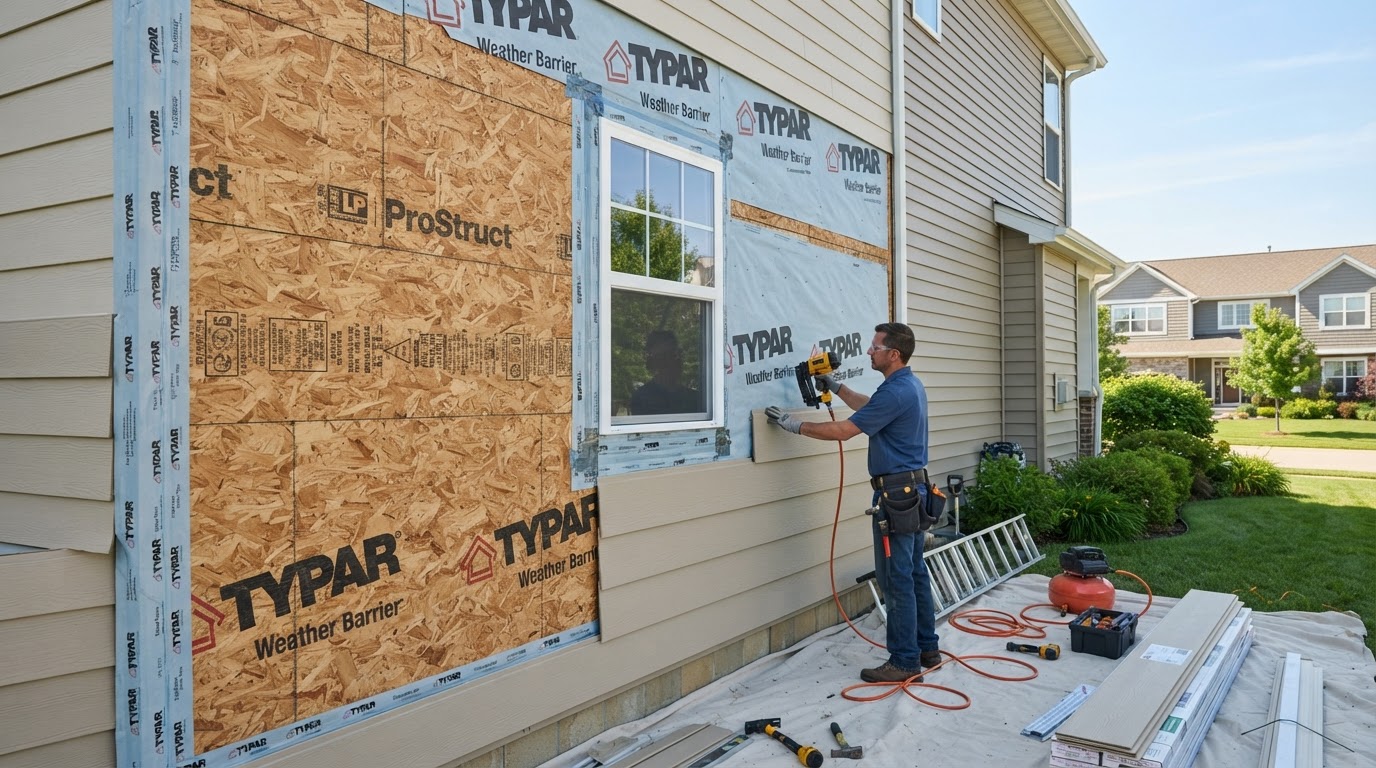
Panels or boards attached to the exterior framing that help form the wall surface and may contribute to structural functions depending on the wall assembly. OSB and plywood are common sheathing. Deteriorated sheathing may need replacement when exposed.
Weather-Resistive Barrier / House Wrap
A water-resistive layer installed behind exterior cladding to help manage water that gets past the siding. House wrap does not make a home waterproof — it is one part of a larger exterior wall assembly that sheds most rain and manages what reaches the wall.
Flashing
Materials installed at openings, penetrations and transitions to direct water toward the exterior. Flashing around windows, doors and siding transitions works with the house wrap to keep water out of the wall assembly.
These components work together: siding sheds most rain, the weather-resistive barrier manages water that reaches the wall, and flashing directs water at openings. A problem in one layer can affect the others, which is why a proper repair addresses the moisture source, not just the visible damage.
What Happens If Rot Is Found Behind Siding?
Small isolated deterioration may require a different scope than extensive damaged sheathing. The repair pathway depends on the extent, the moisture source and the condition of surrounding materials.
Rotted Sheathing
Soft, swollen or delaminated sheathing found when siding is removed may need replacement within the project scope before new siding is installed.
Damaged House Wrap
Torn, missing or deteriorated weather barrier is repaired or replaced so the wall manages water behind the new siding.
Flashing Problems
Failed or missing flashing at windows, doors and penetrations is corrected where within the project scope to stop the moisture source.
Trim & Lower Walls
Deteriorated exterior trim and lower-wall moisture exposure often accompany concealed rot and are coordinated with the repair.
Repair Pathway
- 1Isolated siding repair where damage is limited to the cladding.
- 2Siding removal to inspect the suspected affected area.
- 3Sheathing replacement where deterioration is confirmed.
- 4Weather-barrier repair or replacement as needed.
- 5Flashing correction where within project scope.
- 6Reinstallation or replacement of the siding.
- 7Exterior trim coordination and finishing.
How Sheathing Replacement & House Wrap Work Is Addressed
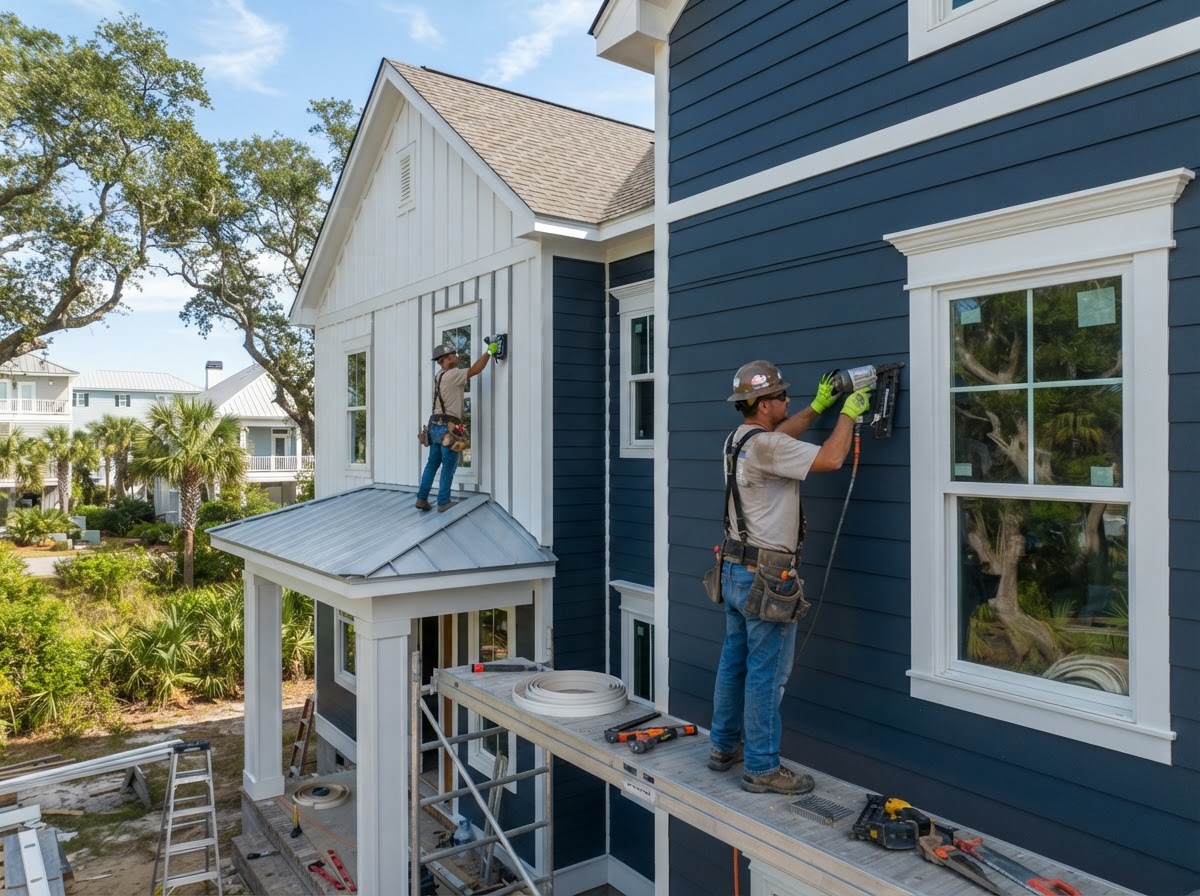
Concealed rot repair follows a sequence that protects the wall at every layer. The correct repair sequence depends on the actual wall assembly and extent of damage — we do not claim all sheathing problems can be solved without framing repairs, and if potentially serious structural deterioration is discovered, the appropriate project scope may require additional qualified evaluation.
- 1Evaluate visible exterior conditions.
- 2Identify the suspected affected area.
- 3Remove siding as required to access concealed materials.
- 4Evaluate exposed sheathing and weather barrier.
- 5Determine the extent of deterioration.
- 6Replace affected sheathing within project scope.
- 7Restore the weather-resistive barrier.
- 8Integrate flashing and details at openings.
- 9Reinstall or replace the siding.
- 10Complete trim and exterior transitions.
We do not claim engineering, mold remediation, pest treatment or major structural reconstruction services unless those services are verified. Discoloration can have multiple causes, and we do not diagnose mold from appearance or promise mold remediation. Our role is to evaluate the exterior wall, recommend the appropriate repair scope, and complete the siding, sheathing and weather barrier work.
Concerned that siding damage may extend into the wall behind it? Discuss the visible symptoms and the affected exterior area.
Request an EstimateWhy Water Management Matters Behind Siding in Wilmington, NC
Wilmington's humidity, heavy rain, wind-driven rain, tropical systems and coastal weather make the layers behind siding as important as the siding itself. Siding is not intended to be the only water-management layer in a properly built wall.
Most exterior siding systems are designed to shed the majority of rain, while flashing and the weather-resistive barrier help manage water that reaches the wall behind the siding. Proper integration between these components is important around windows, doors and other openings — especially in Wilmington's wind-driven coastal rain.
Heavy Rain & Humidity
Frequent rain and humidity test flashing and the weather barrier behind the siding, not just the cladding surface.
Wind-Driven Rain
Coastal winds drive rain past cladding into the wall. Flashing and house wrap manage that water and protect the sheathing.
Openings & Penetrations
Windows, doors and penetrations are where water most often enters. Flashing integration at these points is critical.
Drying Potential
Walls need to dry between wettings. Proper house wrap, drainage and ventilation help the assembly manage coastal moisture.
Siding Rot, Sheathing & House Wrap Wilmington NC FAQs
Direct answers about concealed rot, sheathing and house wrap repair behind siding in Wilmington.
Concerned About Rot or Water Damage Behind Siding in Wilmington, NC?
Describe the visible symptoms — soft areas, water stains, swelling, or storm damage — and we'll help evaluate what may be happening behind the siding and plan the appropriate repair. Request an estimate or call our Wilmington team directly.