Siding Replacement in Wilmington, NC
Wilmington Window & Siding Installation provides residential siding replacement in Wilmington, North Carolina for homeowners dealing with aging siding, exterior damage, maintenance concerns, or a major curb-appeal update. Replacement means removing the existing cladding and installing a new exterior system — the siding, the weather-resistive barrier beneath it, the flashing at every opening, and the trim that finishes the edges.
Worn, loose, cracked, or storm-damaged siding can stop protecting a wall long before it looks obviously failed. When repeated repairs no longer hold up, or when deterioration is widespread, siding replacement is usually the more durable path than continued patching. This page walks through when replacement makes sense, the materials involved, and what coastal North Carolina demands of a replacement exterior.
Signs You May Need Siding Replacement Near Wilmington, NC
Siding replacement is different from isolated siding repair. A single loose panel or a small crack can often be addressed without replacing an entire wall. But when the problems repeat across the exterior, the material is nearing the end of its serviceable life, or the wall beneath shows signs of moisture, full replacement usually makes more sense.
A few damaged panels are sometimes repairable — our siding repair and storm damage page covers those targeted fixes. Use the signs below to gauge whether a full siding replacement is the more practical route for your Wilmington home.
Severe Fading & Chalking
Sun and age chalk and fade siding until the color looks washed out. Once fading is widespread, repainting is usually a short-term fix on a material already failing.
Loose & Missing Panels
Panels loosened by wind or missing after a storm let moisture behind the cladding. Repeated loose-panel issues often point to a fastening or substrate problem worth replacing.
Cracking & Warping
Widespread cracks and warped panels mean the siding has expanded and contracted past its useful range or absorbed moisture. Deterioration at this scale is a replacement signal.
Rot & Moisture Damage
Soft spots, stains, or swelling often mean moisture has reached the sheathing. Hidden rot behind siding is one of the strongest reasons to replace rather than repair.
Repeated Repairs
When the same walls need patching year after year, the cumulative cost and ongoing exposure usually favor a single siding replacement over more repairs.
Major Exterior Update
Beyond damage, many homeowners replace siding to change the home's appearance, reduce upkeep, or coordinate with a broader renovation — all valid reasons on their own.
Seeing widespread siding damage or planning a complete exterior update? Discuss replacement siding options for your Wilmington home.
Request an EstimateReplacement Siding Options for Wilmington, NC Homes
Replacement siding is selected around appearance, maintenance, the existing architecture, and how exposed the exterior is to coastal weather. These are the material categories we most often discuss with Wilmington homeowners planning a replacement.
Vinyl Siding
Vinyl siding is lower-maintenance, never needs painting in most configurations, and comes in a range of colors and profiles. It is a cost-effective replacement choice for humid coastal air, with the tradeoff of lower impact resistance.
Fiber Cement & James Hardie
Fiber cement siding — including James Hardie as a recognized brand — resists fire, rot, and insects and holds paint well for an authentic wood look. It is a durable replacement option at a higher investment than vinyl.
Board & Batten
Board and batten vertical profiles create a dimensional shadow line popular for modern farmhouse and coastal designs — available in vinyl, fiber cement, and engineered wood for replacement projects.
Soffit, Fascia & Trim
Soffit, fascia, and exterior trim finish the eaves, rakes, and openings that complete a replacement — and are usually addressed alongside the siding so the whole exterior system is consistent.
Mixed siding styles — lap siding on the body with board and batten on gables, for example — can work when the design allows. We match the replacement material and profile to your home's style and the conditions the new exterior will face, rather than applying one product to every wall.
How Siding Replacement Works in Wilmington
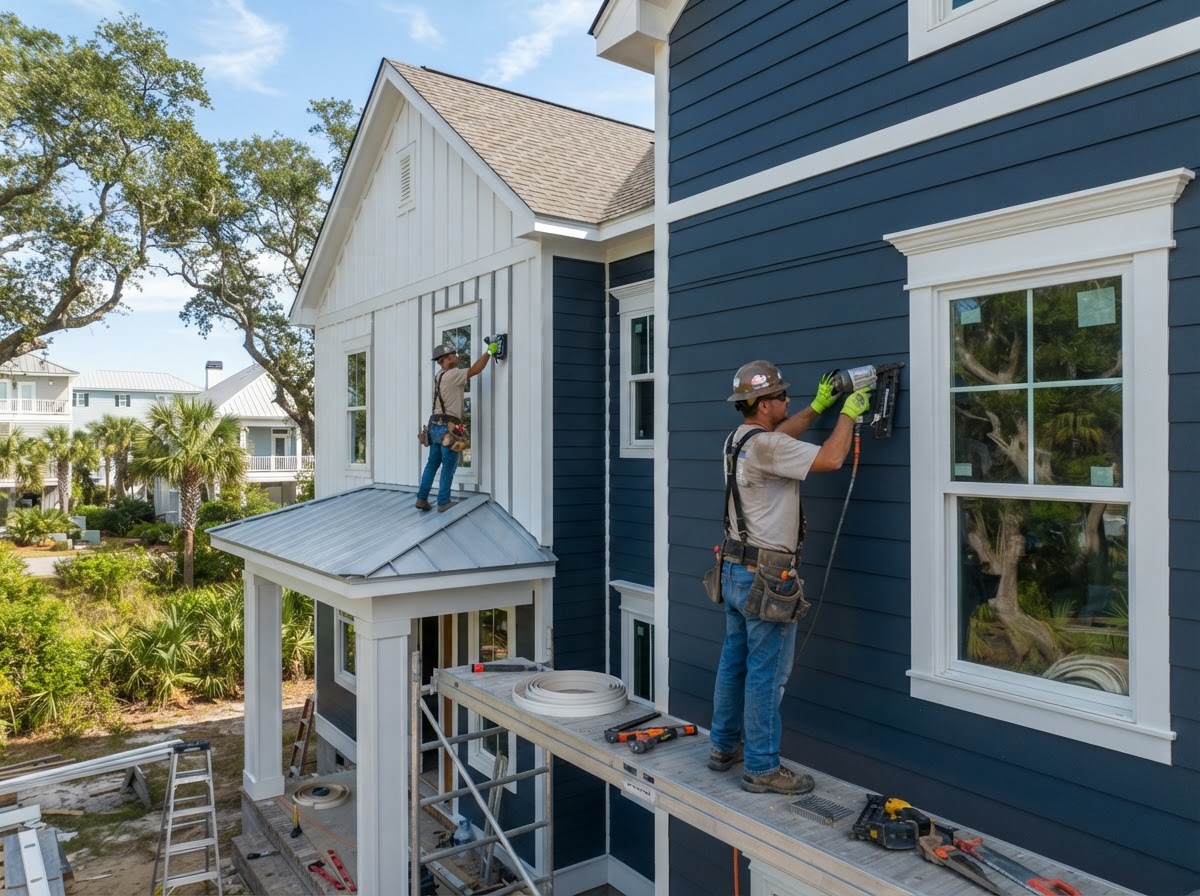
A siding replacement project follows a sequence that protects the wall at every step. The visible siding is the last piece installed — the layers and details beneath it are what keep the wall dry over time.
- 1Evaluate the existing exterior, sheathing, and openings.
- 2Select the replacement material, profile, and color.
- 3Prepare project areas and protect surrounding surfaces.
- 4Remove existing siding and inspect the exposed substrate.
- 5Address house wrap and the weather-resistive barrier as needed.
- 6Install flashing at windows, doors, and penetrations.
- 7Install replacement siding with proper fastening per manufacturer specs.
- 8Complete trim, soffit, and fascia detailing and review the finish.
Proper fastening, expansion and contraction allowances, flashing interfaces at every opening, and correct trim details are what keep wind-driven rain out of the wall. We do not claim sheathing is always replaced — that depends entirely on what we find once the old siding comes off.
Replacement Siding for Wilmington's Coastal Environment
Siding is one layer within a broader exterior wall assembly. In coastal North Carolina that assembly has to manage humidity, rain, wind, sun, and salt air — and the replacement is only as durable as the layers beneath the cladding.
Humidity & Rain
Frequent rain and high humidity test the house wrap and flashing. A replacement lets those water-management layers be inspected and restored before new siding goes on.
Wind & Storms
Coastal winds stress fasteners and panels. Correctly fastened replacement siding resists better — but no siding is storm-proof. Loose panels after a storm warrant a full wall inspection.
Sun & Fading
Strong seasonal sun fades and chalks some materials over time. Fade-resistant vinyl and factory-finished fiber cement hold color longer than field-painted surfaces.
Salt Air & Finishes
Salt air nearer the shoreline affects some metals and finishes. Moisture-resistant materials and corrosion-resistant fasteners reduce upkeep closer to the coast.
Because siding replacement exposes the wall, it pairs naturally with window replacement or window installation — the flashing, barrier, and trim integrate around both at once. Our siding installation page covers the broader new-siding process.
Related Siding & Exterior Services
Siding Replacement Wilmington NC FAQs
Direct answers about replacing residential siding in Wilmington and coastal North Carolina.
Considering Siding Replacement in Wilmington, NC?
Let's look at the condition of your existing siding, the wall beneath it, and the replacement materials that fit your home and coastal exposure. Request an estimate or call our Wilmington team directly.