Energy-Efficient Windows in Wilmington, NC
Energy-efficient windows are designed around a combination of frame, glass, spacer, and installation details that together improve a window's thermal performance. Wilmington Window & Siding Installation helps Wilmington homeowners understand what those features actually do — and how to choose a package that fits the sun, humidity, and storm exposure of each opening rather than buying on a single label.
This page focuses on thermal and energy performance: how insulated glass, Low-E coatings, gas fills, and ratings like U-factor and SHGC affect comfort. For the broader decision about replacing aging windows, see our window replacement page.
What Makes a Window Energy Efficient?
There's no single feature that makes a window efficient. It's the combination of glass package, frame design, spacer, air sealing, and correct installation — and the ratings that measure them. Here's what each piece actually does.
Insulated Glass
Two or more glass panes with a sealed airspace between them insulate far better than single-pane glass. The sealed space — often filled with argon — slows conductive and convective heat transfer.
Low-E Coatings
A Low-E coating reflects infrared heat while letting visible light through. It reduces solar heat gain in summer and retains interior heat in winter without darkening the glass.
Gas Fills
Argon or krypton gas between the panes is denser than air, reducing convective heat movement inside the sealed unit and improving insulation. It's a common upgrade on efficient windows.
Frame Design
The frame material affects thermal performance at the perimeter. Vinyl and fiberglass conduct less heat than metal. Multi-chambered vinyl frames further slow transfer at the edge of the glass.
U-Factor & SHGC
U-factor measures heat conducted (lower is better); solar heat gain coefficient measures solar heat passing through (lower blocks more heat). Both ratings help you compare windows apples to apples.
Air Leakage
Tight weatherstripping and quality seals limit drafts through operable sashes. Air leakage ratings indicate how much air passes through a closed window — a major comfort and efficiency factor.
We explain these ratings in plain English so you can compare products on performance rather than marketing language. The most efficient window for your home depends on which openings face the most sun, how the home is built, and what you're replacing.
Considering more efficient replacement windows? Discuss glass, frame, and installation options for your Wilmington home.
Request an EstimateEnergy-Efficient Replacement Window Options Near Wilmington, NC
Efficient window packages can be mixed and matched opening by opening. A south-facing living room may benefit from a lower SHGC glass, while a shaded north window may not. Here's how the options combine.
Vinyl Frames
Vinyl replacement windows with multi-chambered frames are a common efficient choice in Wilmington — moisture-resistant, no painting, and a poor conductor of heat.
Low-E & Argon Glass
Low-E coatings and argon gas fills are the most common efficiency upgrades. They reduce solar heat gain and conductive loss without sacrificing visible light or views.
Glass Packages by Orientation
Different exposures benefit from different glass. We help select a package that balances heat gain, light, and comfort for each opening's orientation rather than one generic spec for the whole house.
Window Styles
Energy efficiency is available across double-hung, casement, slider, picture, and bay or bow styles. Fixed-pane windows naturally offer the best sealing since they don't open, but operable styles can still perform well.
Why Installation Matters for Energy-Efficient Windows
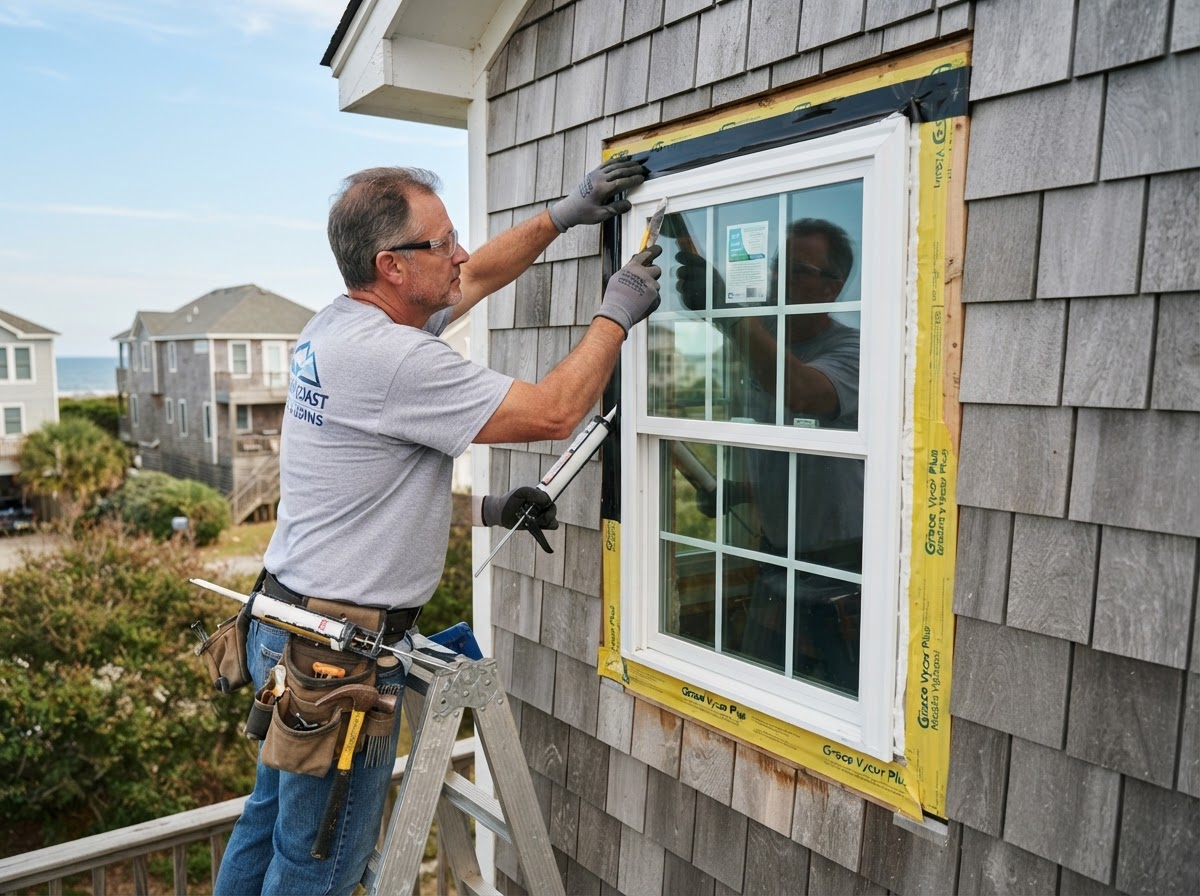
An efficient window is only as good as its installation. Gaps around the frame, poor sealing, or incorrect flashing let air and water bypass the glass package entirely — so the window's ratings never translate into real comfort.
- Gaps between frame and rough opening are insulated to stop convective airflow.
- Perimeter sealant and backer rod close air leakage paths around the window.
- Flashing and weather-resistive barrier manage water at the opening.
- Level, plumb fit keeps sashes sealing tightly against weatherstripping.
- Correct shimming preserves smooth operation and alignment.
For the installation workmanship behind every efficient window, see our window installation page.
Energy-Efficient Windows for Wilmington's Heat, Sun & Humidity
Wilmington's long, humid cooling season and strong coastal sunlight make solar heat gain and air leakage the performance factors that matter most day to day.
Cooling-Season Heat Gain
Low SHGC glass limits solar heat through south- and west-facing windows, easing the load your HVAC carries during humid Wilmington summers.
Humidity & Air Leakage
Tight seals limit not just drafts but the humid air that travels with them, reducing indoor moisture and the comfort swings it causes.
Comfort
Lower U-factor glass reduces cold-glass radiant discomfort near windows in cooler months and hot-glass radiant heat in summer.
Glass Performance
The actual benefit depends on the package selected. We compare ratings so the windows you choose genuinely suit your home — not a one-size spec.
We do not promise a specific reduction in utility bills. Real savings vary by the existing windows, home construction, HVAC system, insulation, glass package, orientation, and installation quality — the whole home, not the windows in isolation.
Related Window Services
Energy-Efficient Windows Wilmington NC FAQs
Plain-English answers about efficiency, ratings, and what they mean for your home.
Want More Efficient Windows for Your Wilmington Home?
Let's compare glass packages, frame options, and the ratings that matter for your sun exposure and climate. Request an estimate or call our Wilmington team directly.