
Leaking Window, Flashing & Water Intrusion Repair in Wilmington, NC
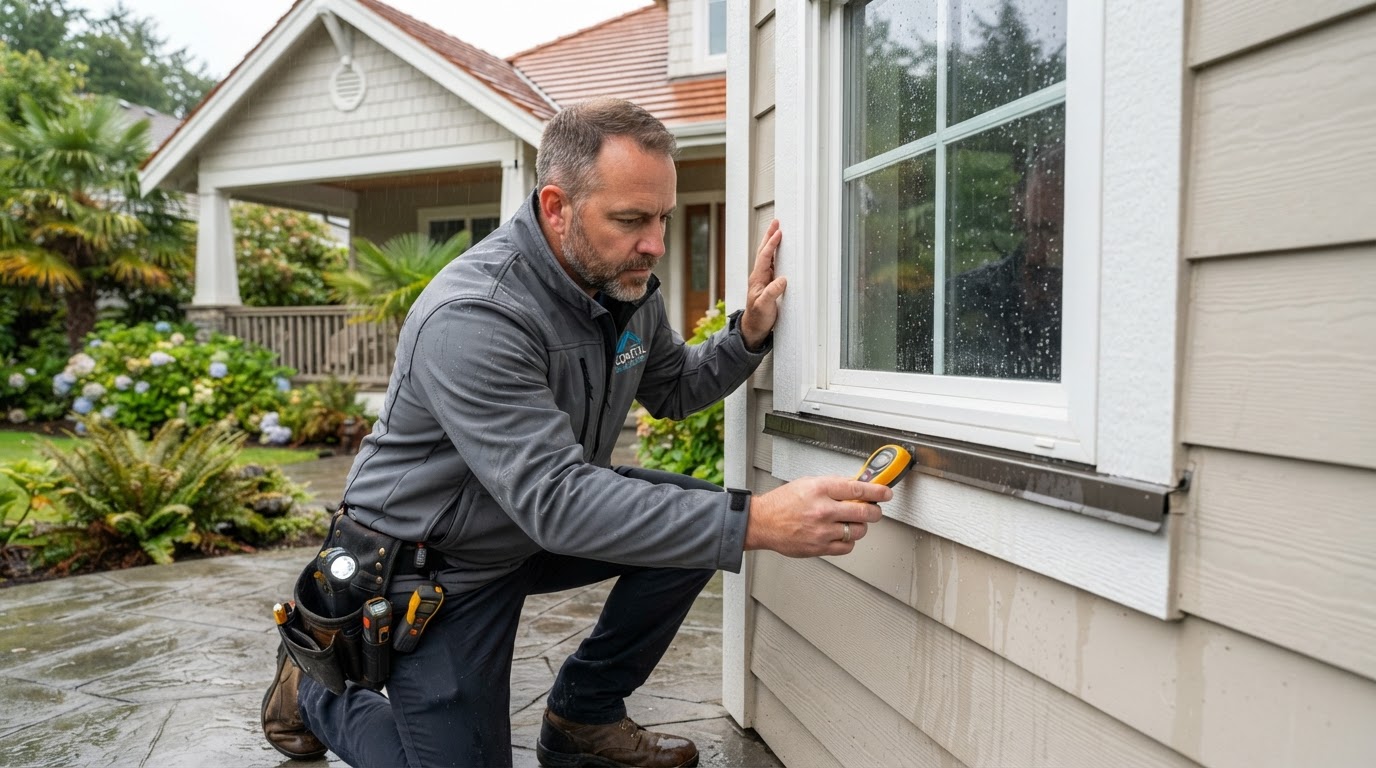
Water near a window does not always mean the window itself is leaking. Wilmington Window & Siding Installation helps Wilmington homeowners trace where water is actually entering the assembly — whether through the window, the flashing, the sealant joints, the exterior trim, or a siding interface above the opening — before recommending a repair.
A leaking window should be evaluated for its real entry path instead of assuming new caulk alone will solve the problem. The place where water appears indoors is not always the place where water enters the exterior, and the right repair follows the actual source.
Whether the fix is a sealant repair, flashing work, a window-component repair, siding or trim work, or full window replacement depends on what the evaluation finds. We do not promise invasive diagnostic testing or a guaranteed repair without understanding the source first.
Why Is Water Getting Around My Window?
The signs of a window leak are usually obvious — damp trim, water stains, peeling paint, soft materials, or moisture that appears during heavy rain. The source is often less obvious, because water can travel inside the wall before it shows up indoors.
Failed Perimeter Sealant
Cracked, shrunken, or missing sealant between the window, trim, and siding lets wind-driven rain behind the exterior finish. A specific failed joint is one of the most common leak sources.
Damaged or Missing Flashing
Flashing that is torn, improperly lapped, or not integrated with the house wrap can let water past the opening even when the window is sound. Flashing repairs often stop leaks the window never caused.
Deteriorated Exterior Trim
Trim that has cracked, warped, or separated from the opening creates gaps where water can enter. Trim repair or replacement restores the water-shedding detail around the window.
Window Component Failure
A failed sash seal, weep system, or weatherstripping can let water through the window itself. Component-level repair may resolve the leak without replacing the whole window.
Siding Interface Issues
Water that gets behind siding above or beside the window can travel to the opening and appear as a window leak. The siding, not the window, is the source in those cases.
Water Entering Above the Opening
The drywall or trim below a window may be wet because water entered the wall higher up and ran down inside the cavity. Tracing the water back to its entry point is what makes the repair stick.
Where it appears is not always where it enters. The place water shows up indoors is frequently below and away from the actual exterior entry point. A proper evaluation traces the moisture back to its source rather than sealing the visible wet area alone.
Seeing water around a window after rain? Describe where the moisture appears and the exterior conditions around the opening, and we'll help trace the actual entry path.
Request an EstimateDoes a Leaking Window Need Caulk, Flashing Repair or Replacement?
The correct repair depends on where the water is entering. Each leak source points to a different scope, and using the wrong fix is why leaks so often return after caulk alone.
Sealant repair
May help where a specific failed exterior joint is identified — a cracked bead between trim and siding, for instance. Sealant repair is the right scope only when the leak traces to that joint and the surrounding assembly is otherwise sound.
Flashing-related work
May be appropriate when the water-management details around the opening are compromised — torn, missing, or improperly integrated flashing. Repairing the flashing directs water back outside rather than into the wall.
Window repair
May be appropriate where an individual window component is failing — a failed sash seal, clogged weep, or worn weatherstripping. Component-level repair can stop the leak without replacing the whole window.
Window replacement
May be appropriate when the window assembly, frame, or surrounding condition is substantially deteriorated. Replacement becomes the better scope when repair would leave a failing window in place.
Siding or trim work
May matter when moisture is entering through adjacent exterior components — loose siding, a failed siding-to-trim transition, or deteriorated trim around the opening. In those cases the siding repair or exterior trim is the scope that stops the leak, not the window.
For the broader window repair overview — including failed glass and hardware — see our window repair and glass replacement page, and for deteriorated frames see our window replacement page.
How Leaking Window Problems Are Evaluated
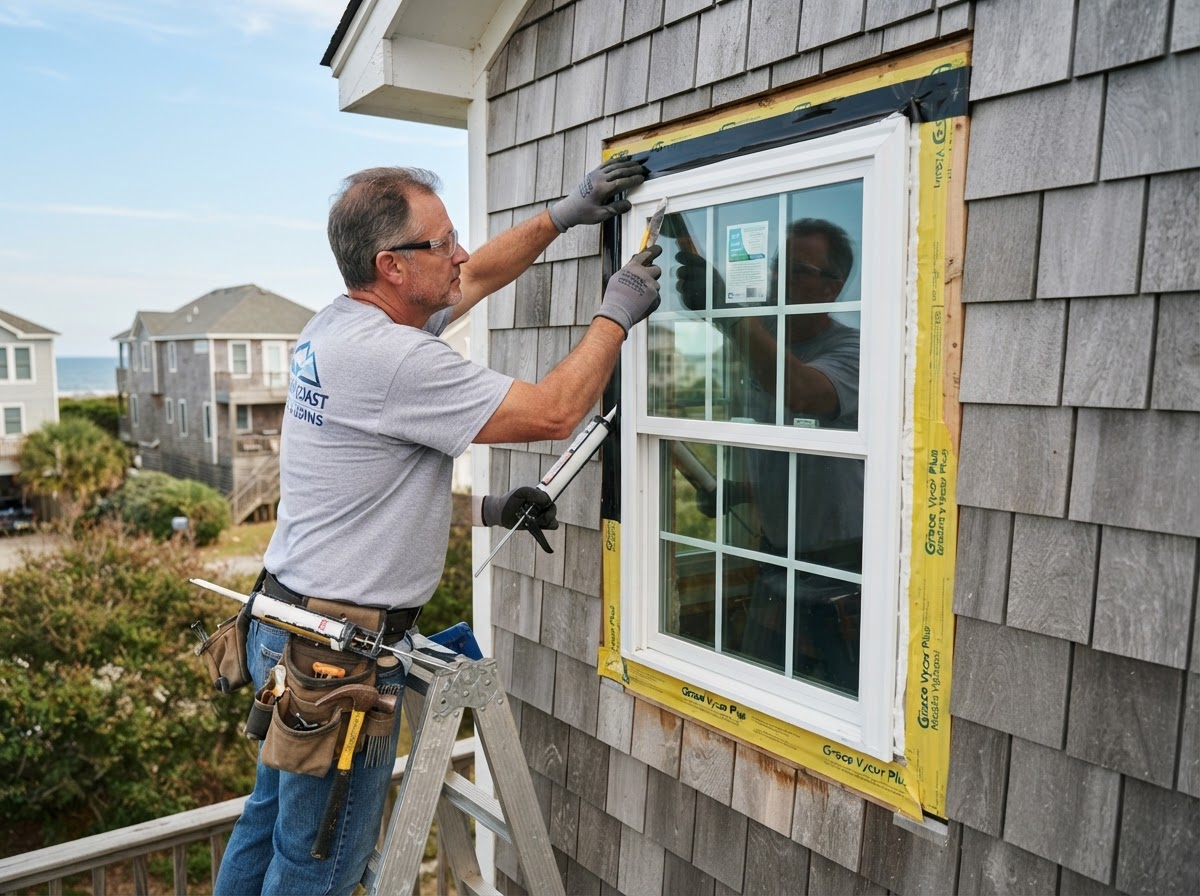
A leaking window is approached as a source-finding exercise before it becomes a repair. Jumping straight to caulk or a new window often leaves the real entry path untouched, which is why leaks so often return.
- 1Identify the visible symptoms and where moisture appears.
- 2Review both the interior and exterior conditions around the opening.
- 3Inspect sealant joints and exterior trim for gaps or failure.
- 4Review flashing interfaces where they are accessible.
- 5Consider siding and opening transitions above and beside the window.
- 6Determine the probable repair scope based on the likely entry path.
- 7Repair or replace the affected components as appropriate.
- 8Monitor the completed area under normal weather conditions.
We do not promise invasive diagnostic testing unless that is appropriate for the project, and we do not guarantee a repair without first understanding the source. The goal is a repair that lasts because it addresses the actual entry path.
Window Water Intrusion During Wilmington's Heavy Rain & Coastal Weather
Wilmington's wind-driven rain, tropical weather, and humidity test the sealants, flashing, and siding intersections around every opening. But weather is not the cause of every leak — it simply exposes weaknesses that were already present.
Wind-Driven Rain
Storm winds push rain sideways and upward, reaching sealant and flashing details that calm rain never touches. Those details are where most coastal window leaks originate.
Tropical Weather
Tropical systems deliver sustained, heavy rain over hours. Prolonged exposure can overwhelm a marginal seal or flashing detail that handles ordinary rainfall fine.
Humidity
High humidity means more moisture is available to enter any gap that opens in the exterior assembly. Wet materials also dry more slowly in humid coastal air.
Flashing & Drainage
Proper flashing, sealants, and drainage details are what shed coastal weather around openings. Their condition — not the weather itself — is what keeps water out.
Repeated water intrusion deserves attention because prolonged moisture can affect surrounding materials. When water has reached the framing or sill, our rotted window sill and frame repair page covers that deterioration. And where moisture is entering through the sealed glass unit rather than around it, that is a different repair.
Leaking Window & Flashing Repair Wilmington NC FAQs
Direct answers about water intrusion, flashing, and leaking windows in Wilmington.
Seeing Water Around a Window in Wilmington, NC?
Describe where the moisture appears and the exterior conditions around the opening, and we'll help trace the entry path and weigh sealant, flashing, trim, or window-replacement scope. Request an estimate or call our Wilmington team directly.