
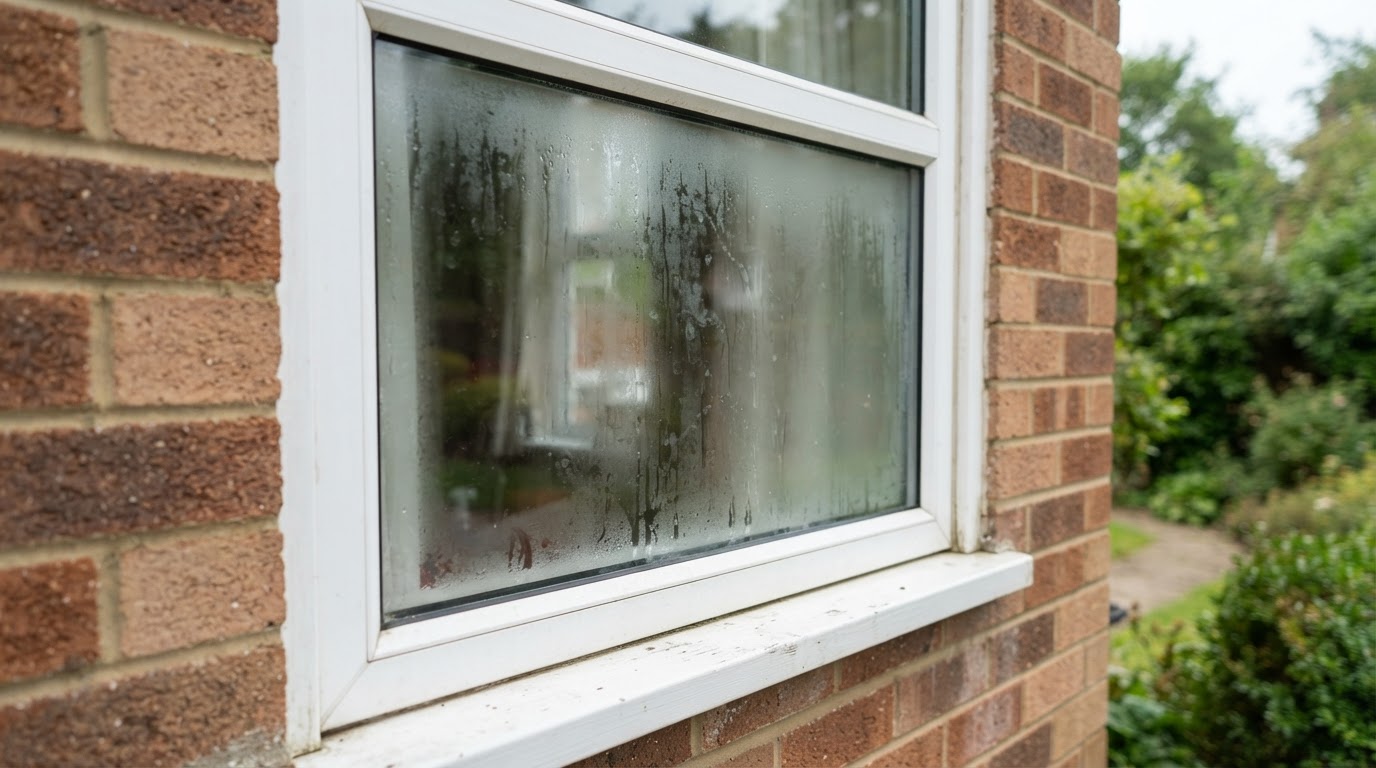
Foggy Window & Failed Seal Glass Replacement in Wilmington, NC
Fogging, haze, or moisture trapped between the panes of an insulated window commonly indicates that the sealed insulated glass unit has failed.Wilmington Window & Siding Installation helps Wilmington homeowners determine whether the failed glass can be replaced alone or whether the sash, frame, or surrounding materials point toward complete window replacement.
This is different from ordinary condensation that forms on the surface of the glass, which may relate to indoor humidity or exterior conditions rather than a failed seal. The right response depends on where the moisture is actually located and on the condition of the window around it.
Depending on the window condition, the insulated glass unit may sometimes be replaced, the sash may sometimes require replacement, or complete window replacement may make more sense when other components are deteriorated. We evaluate the actual window before recommending a fix.
What Causes Foggy Windows in Wilmington, NC?
Understanding why a window fogs starts with the insulated glass unit itself. A double-pane window is a sealed assembly — two panes of glass separated by a spacer and sealed around the perimeter, often with an insulating gas between them. Fogging happens when that seal fails.
Insulated Glass Unit Failure
The perimeter seal on the IGU breaks, the insulating gas escapes, and humid air enters the space between the panes. Once that happens, moisture condenses on the inner glass surfaces and the unit fogs.
Age & Thermal Cycling
Years of sun exposure, temperature swings, and the expansion and contraction that come with them slowly age the perimeter sealant. Heat and UV are significant factors in how long a seal lasts before it fails.
Frame & Sash Movement
A window that moves in its opening, or a frame that has shifted, can stress the sealed glass unit. When the sash or frame no longer supports the glass properly, seal failure can follow.
Surface condensation (often not a failed seal)
Moisture that forms on the inside or outside surface of the glass and wipes off is typically ordinary condensation from indoor or outdoor humidity. It can be a sign of high indoor humidity rather than a broken seal — and it does not by itself mean the window has failed.
Condensation between the panes (failed seal)
Moisture, haze, droplets, or mineral deposits trapped between the two panes — where you cannot wipe them away — usually indicates the sealed insulated glass unit has failed. The cloudiness may come and go with temperature and humidity but will not clear permanently on its own.
Not all condensation means a failed window. The key is where the moisture sits: surface condensation is often manageable, while condensation trapped between the panes points to seal failure that replacement of the insulated glass unit can resolve.
Seeing haze or moisture trapped between window panes? Discuss whether insulated glass replacement or complete window replacement may be appropriate for your Wilmington home.
Request an EstimateDo Foggy Windows Need Glass Replacement or Full Window Replacement?
The clearest way to decide: if the fog is the only problem and the frame and sash are sound, replacing the insulated glass unit alone usually resolves it. If the frame or sash is also deteriorated, complete window replacement is usually the better long-term choice.
Insulated glass replacement may be appropriate when
- The frame remains in good condition
- The sash remains functional and operates correctly
- The problem is isolated to the sealed glass unit
- There is no water intrusion around the opening
- The window still operates smoothly
Full window replacement may deserve consideration when
- The frame is deteriorated or rotting
- The sash is damaged or no longer operates well
- There is water intrusion around the opening
- Multiple window components are failing at once
- You want broader performance or comfort improvements
For a broader overview of window repair and glass-replacement decisions — including cracked panes and failed hardware — see our window repair and glass replacement page. If the frame itself is the issue, window replacement is usually the better path, and energy-efficient windows may be worth comparing when you are already replacing a unit.
How Insulated Glass Replacement Works
Replacing a failed insulated glass unit starts with confirming where the moisture actually is and whether the rest of the window can support a new glass unit. The glass unit — the IGU, or insulated glass unit — is the sealed assembly of two panes and a spacer that sits inside the sash.
- 1Evaluate the window and confirm the moisture is between the panes.
- 2Determine where the moisture is located and rule out surface condensation.
- 3Inspect the sash and frame condition around the failed unit.
- 4Identify the glass dimensions and configuration for the replacement.
- 5Determine whether glass-only replacement is practical for that product.
- 6Replace the failed insulated glass unit with a matching IGU.
- 7Review operation, sealing, and appearance after the replacement.
Replacement IGUs can be ordered with Low-E coatings, argon gas fills, and grids between the glass where applicable, and tempered glass is used where a specific application requires it. We do not make code-specific claims without verifying the actual product and application.
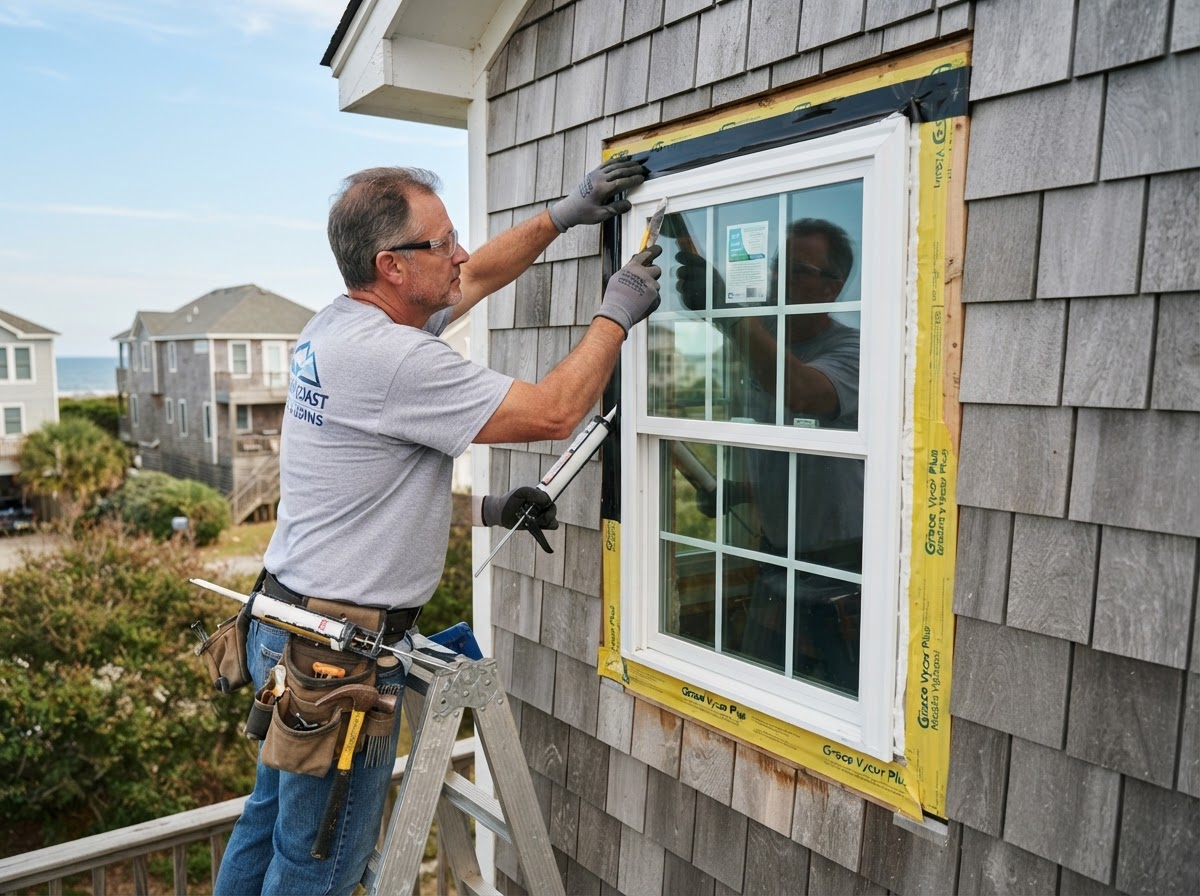
Failed Window Seals in Wilmington's Coastal Climate
Wilmington's heat, humidity, strong sun, and wind-driven rain are factors in how long window seals last — but they are not automatically the sole cause of any given insulated glass failure.
Heat & Sun
UV exposure and hot glass age perimeter sealants over time. South- and west-facing windows often see more thermal stress than shaded elevations.
Humidity
Coastal humidity means more moisture is ready to enter a sealed unit the moment its perimeter seal breaks, which is why fogging can appear quickly after a failure.
Temperature Cycles
Day-to-night and season-to-season temperature swings expand and contract the glass and spacer, working the sealant until it can no longer hold.
Wind-Driven Rain
Storms drive rain against exteriors. While wind-driven rain does not by itself break a sealed unit, it can expose seal and frame weaknesses around the opening.
Seal failure is often connected to these related window problems. When moisture gets in around an opening rather than between the panes, the issue may be leaking windows and flashing rather than the sealed glass unit. And when water has reached the frame or sill, rotted window components may need attention alongside the glass.
Foggy Window & Failed Seal Wilmington NC FAQs
Direct answers about foggy double-pane windows and failed insulated glass seals in Wilmington.
Dealing With Foggy Windows in Wilmington, NC?
Tell us which windows are foggy and whether the haze is between the panes or on the surface, and we'll help you weigh insulated glass replacement versus complete window replacement. Request an estimate or call our Wilmington team directly.