Insulated Vinyl Siding Installation in Wilmington, NC
Wilmington Window & Siding Installation provides insulated vinyl siding installation in Wilmington, North Carolina for homeowners considering a more substantial, lower-maintenance exterior with added insulating value. Insulated vinyl siding combines vinyl exterior cladding with a rigid or semi-rigid insulation layer designed to fit behind or attach to the siding profile depending on the product system.
Homeowners often research insulated siding when replacing existing siding, adding insulation outside the wall cavity, reducing thermal bridging potential, or choosing a more rigid, substantial siding profile for a coastal exterior renovation.
How Insulated Vinyl Siding Differs From Standard Vinyl Siding
Standard vinyl siding is exterior vinyl cladding installed over the prepared wall assembly according to product-specific requirements. Insulated vinyl siding is a vinyl siding system incorporating an insulation layer — typically contoured foam — designed to fit the siding profile.
Insulated vinyl siding is exterior vinyl cladding manufactured with an insulating backing designed to fit the siding profile. The added layer can increase panel rigidity and provide additional thermal resistance, although actual performance varies by product and wall construction. Not all insulated siding products are identical — quality, thickness and thermal values vary by manufacturer.
Added Thickness & Rigidity
The contoured foam backing makes panels thicker and stiffer, helping siding lie flatter over uneven walls and resist impact somewhat better than thin standard vinyl.
Wall Insulation Contribution
An insulation layer outside the wall cavity can add thermal resistance and may reduce some thermal bridging, depending on the product and the existing wall assembly.
Profile & Appearance
The backing can produce a more substantial panel profile and straighter lines. Colors and textures vary by manufacturer, so the finished appearance depends on the product selected.
Installation Details
Proper fastening, expansion allowance and wall flatness matter for insulated systems. We follow the manufacturer's product-specific requirements rather than a single universal method.
Considering a more substantial vinyl siding system? Compare insulated and standard vinyl siding options for your Wilmington home.
Request an EstimateInsulated Vinyl Siding Options Near Wilmington, NC
Insulated vinyl siding is available in horizontal lap profiles, different panel exposures, colors and textures, with coordinating trim, soffit, fascia and window trim. Homeowner priorities usually come down to exterior appearance, lower routine maintenance, added insulating value and panel rigidity.
Insulated Vinyl vs Standard Vinyl
Standard vinyl siding offers a lower-maintenance, moisture-resistant exterior at a lower cost. Insulated vinyl adds a foam backing for rigidity and thermal value but costs more and is thicker. Choose standard vinyl for value and maintenance; choose insulated for a substantial profile and added exterior insulation.
Insulated Vinyl vs Fiber Cement
Fiber cement siding offers a rigid, paintable, wood-like exterior with high impact resistance. Insulated vinyl offers integrated insulation and no painting. The tradeoff is appearance versus maintenance — we compare both for your home's style and exposure.
When a coordinated exterior renovation includes replacement windows, the insulation, flashing and trim integrate around both. See our energy-efficient windows page for the performance-oriented window side of those projects, and our siding replacement page for the broader removal-and-replace path.
How Insulated Vinyl Siding Installation Works
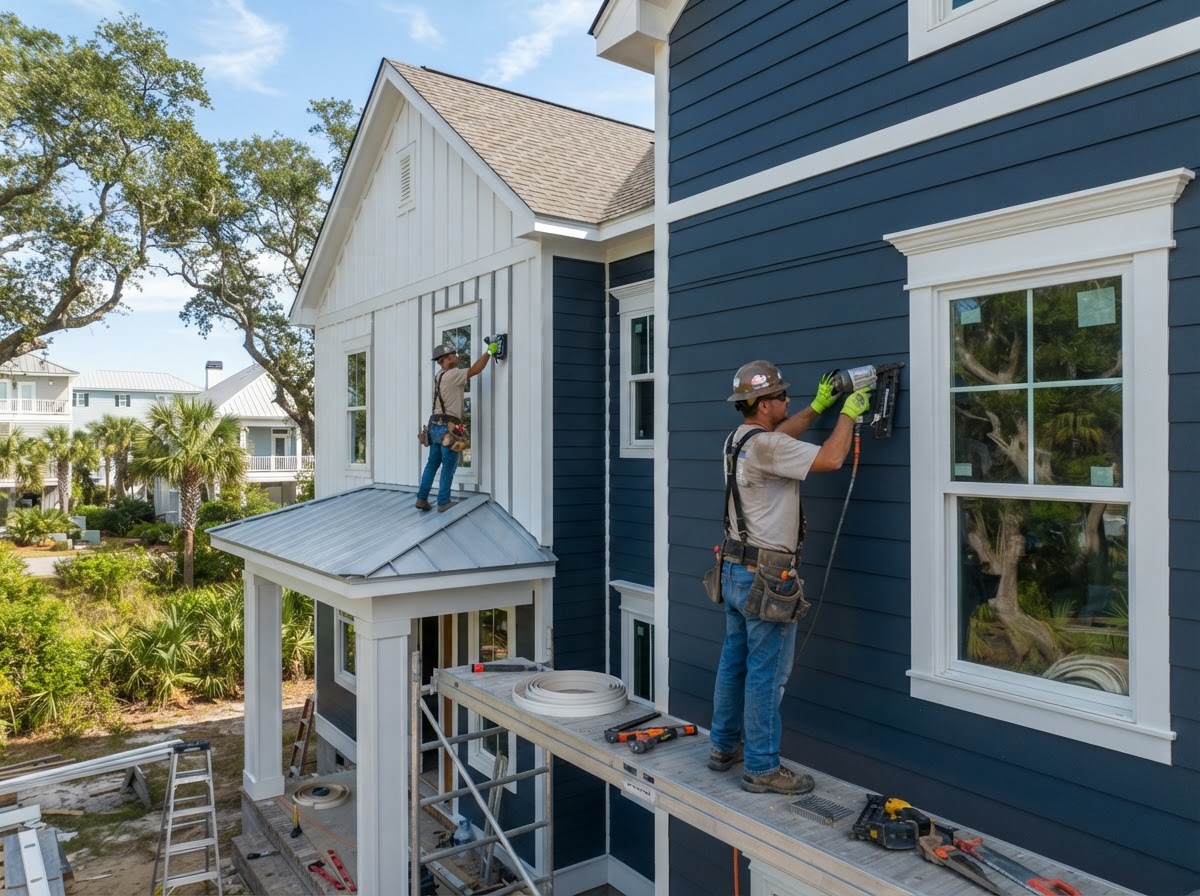
Insulated vinyl siding follows the same water-managed sequence as any siding installation, with added attention to wall flatness, fastening and expansion. The visible siding is the last piece installed — the work beneath it is what keeps the wall dry.
- 1Evaluate the existing exterior and openings.
- 2Measure siding areas and review existing siding condition.
- 3Select the insulated profile, color and system.
- 4Prepare or remove existing siding as required.
- 5Review sheathing and weather barrier where exposed.
- 6Install trim, accessories and flashing at openings.
- 7Install insulated siding per product requirements.
- 8Address windows, doors and transitions; complete detailing.
Proper fastening matters: fasteners spaced and driven per the manufacturer's instructions allow the thermal expansion and contraction that vinyl goes through across Wilmington's hot summers and cooler mornings. Starter components, corners, flashing and drainage details are what keep wind-driven rain out of the wall. There is no single universal fastening specification — it depends on the product.
Insulated Siding for Wilmington's Heat, Humidity & Coastal Weather
Wilmington's cooling-season heat, humidity, strong sun, rain and wind-driven storms shape how insulated siding performs and how it should be installed. The added insulation does not replace proper water-management layers.
Heat & Sun
Strong seasonal sun heats exterior walls and can fade some colors. Fade-resistant insulated vinyl and lighter colors reduce heat absorption on the wall surface.
Humidity & Rain
High humidity and frequent rain test the weather-resistive barrier and flashing behind the siding, not just the vinyl surface.
Wind-Driven Rain
Coastal winds drive rain against walls. Proper flashing, house wrap and drainage keep water from reaching the sheathing behind insulated siding.
Salt Air & Maintenance
Salt air nearer the shoreline affects some metals and finishes. Moisture-resistant materials and corrosion-resistant fasteners reduce the maintenance burden closer to the coast.
Insulated vinyl siding does not replace proper water-resistive barriers, flashing or wall drainage. The foam backing adds thermal value, but the siding is still one layer within a broader exterior wall assembly. See our siding installation page and sheathing and house wrap page for the water-management layers behind the cladding.
Related Siding Services
Insulated Vinyl Siding Wilmington NC FAQs
Direct answers about foam-backed insulated vinyl siding for Wilmington homes.
Considering Insulated Vinyl Siding in Wilmington, NC?
Let's compare insulated and standard vinyl siding options, review your home's existing exterior, and plan a water-managed installation suited to coastal North Carolina. Request an estimate or call our Wilmington team directly.